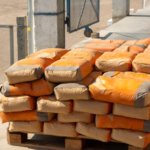

For those who have sourced for cement for mid-scale projects, you know the drill by now. You make a few calls to two or three suppliers, receive three prices for what is supposed to be the same bag and find that the supplier offering the lowest price does not have the product available till next week. While this process is not necessarily broken, it is very inefficient and wastes time which many construction managers cannot afford.
This is at least part of the reason why more and more construction companies are sourcing their cement from online sites rather than having to go through that rigmarole each and every time. It is not because they are shunning the local distributors, because there are always small scale projects which require that approach.
This guide covers the cement grades you’re likely to need, how local dealers compare with bulk online suppliers, and where a platform like Online Cement Buying fits if you’re managing something larger than a weekend repair job. If you’ve been burned before by a supplier that promised one thing and delivered another, some of this will probably sound familiar.
Which Cement Grade Do You Actually Need?
This part trips people up more than it should. Cement isn’t one product — it’s a handful of different grades and blends, and picking the wrong one can either waste money or, worse, leave you with a structure that doesn’t hold up the way it should.
OPC 33 is the most basic Ordinary Portland Cement grade. It’s fine for plastering, flooring, and other non-structural work where you don’t need much early strength. Cheap, adequate, nothing fancy.
OPC 43 is the one most general construction defaults to. Multi-storey residential buildings, standard RCC work — this covers the bulk of what gets built in India day to day.
OPC 53 is what you reach for when strength and speed matter. High-rises, bridges, industrial structures. It gains compressive strength faster than the lower grades, which is useful when your timeline is already tight and you can’t afford to wait around for the concrete to cure.
PPC (Portland Pozzolana Cement) has fly ash mixed in, which makes it noticeably better at resisting moisture and cracking over time. A lot of contractors prefer it for plastering and general home construction simply because it ages better.
PSC (Portland Slag Cement) tends to get used on bigger infrastructure jobs because it performs consistently across large pours — important when you’re working with thousands of bags rather than a few dozen.
Rapid Hardening Cement does exactly what it sounds like. It’s built for jobs where speed matters more than anything else — urgent repairs, precast elements, road work — because it reaches usable strength much faster than standard cement.
If your structural engineer has already specified a grade, go with that over any general rule of thumb. But knowing roughly what each grade is for means you won’t be caught flat-footed when a supplier asks what you need.
The Old Way: Local Dealers and Distributors
For decades this was really the only option, and honestly, it still works fine for a lot of situations. You walk in, you check the stock yourself, you pay, you leave. For a small job or a one-time top-up, there’s nothing wrong with that.
The upside is real: you can physically inspect what you’re buying before handing over money, and if you’ve been going to the same dealer for years, you might get better terms than a stranger would. No waiting on a delivery window either, if they’ve got what you need sitting right there.
The downside shows up once your order gets bigger or your timeline gets tighter. Stock isn’t always predictable — a dealer might have OPC 43 in stock but be out of OPC 53 for another week. Pricing swings from shop to shop with no real logic to it. And if you need a genuinely large quantity, you’re often the one arranging trucks, labor, and offloading, which turns a simple cement order into a logistics project of its own.
None of this makes local dealers bad. It just means the further a project scales up, the more this lack of standardization becomes the actual bottleneck — not the material itself.
Buying Cement Online: What Actually Changes
Over the last few years, a growing number of contractors have started to buy cement online rather than work the phones every time they need stock. The appeal isn’t complicated: a fixed rate instead of a moving target, logistics that are handled instead of arranged from scratch, and stock that’s verified before it ever leaves the warehouse.
Online Cement Buying is one of the platforms built around exactly this — bulk, non-trade cement supply for builders, developers, and project teams, rather than retail buyers picking up a few bags.
A few things about how it works are worth knowing. Every grade — OPC 33, 43, 53, PPC, PSC, and Rapid Hardening — is available under one supplier, so you’re not splitting orders across three different vendors depending on what a project needs that week. Every bag is QR-verified before dispatch, which matters more than people think, because mislabeled or substandard cement quietly showing up in a structure is a real risk, not a hypothetical one. Delivery windows run around few hours across India so a shortage on-site doesn’t automatically turn into a two-day delay. And there’s no arbitrary minimum order size, so it works whether you’re placing a full project order or just topping up a partially finished pour.
For anyone managing a commercial build or a residential tower, this removes a whole layer of coordination that would otherwise land on whoever’s running procurement.
It also matters more once a project spans multiple sites. A developer building in both Mumbai and Chennai at the same time doesn’t want two separate supplier relationships with two different price lists and two different delivery timelines to track. Sticking with one supplier across cities keeps the ordering process, the invoicing, and the material quality identical no matter where the cement is headed — and that consistency is often worth more, over the life of a project, than a slightly cheaper one-off rate from a local dealer.
Local Dealers vs Online Bulk Suppliers
| Factor | Local Dealers | Bulk Online Supplier |
| Pricing | Varies dealer to dealer | Fixed, transparent |
| Stock | Inconsistent by grade | Held specifically for bulk orders |
| Delivery | Usually arranged by you | Handled by the supplier |
| Best for | Small, occasional orders | Project-scale and repeat orders |
| Authenticity checks | Rarely standard | QR-verified before dispatch |
| Coordination effort | High | Low |
How you match this to your actual situation depends mostly on scale. A small repair or a quick top-up? A nearby dealer you can walk into is probably still your fastest option. A mid-size job — an extension, a compound wall, a small commercial unit — is worth pricing out both ways before deciding, since delivery costs can close the gap faster than people expect. Anything larger — towers, commercial developments, government contracts — is usually where buying cement online through a bulk supplier starts paying off in a way that’s hard to ignore, mostly because the supply stays predictable even when the project doesn’t.
One thing worth keeping in mind regardless of which route you take: cement is only one line item. Sand, aggregate, steel, and labor all move independently of it, so don’t let a good cement rate distract from the total cost of the job.
So Where Should You Actually Buy From?
There isn’t a single correct answer — it really does come down to the size and pace of what you’re building.
Homeowners and small contractors handling repairs or a modest build are usually fine sticking with a nearby dealer who has decent stock and fair pricing. Anyone running a project at real scale — multiple floors, a commercial site, a government contract — is where it starts to make more sense to buy cement online through a bulk supplier built for exactly that kind of volume. The value isn’t only in the price; it’s in not having to think about cement supply every few days while you’re trying to run the rest of the site.
If you’re genuinely unsure which way to go, get a bulk quote first and compare it against what a local distributor charges once delivery and time are factored in. Most people find the decision gets pretty obvious once those numbers are sitting side by side.
Whichever way you go, the basics don’t change: confirm the grade your engineer actually specified, check that what you’re buying is genuine, and price in delivery time as well as the per-bag rate. Getting this right early on saves a lot more than it costs to double-check.
A Few Mistakes People Make Ordering Cement
Most of the problems that show up later on a site trace back to something simple that went wrong at the ordering stage. A few come up often enough that they’re worth flagging.
Ordering by brand instead of grade is a common one. Someone asks for “the usual brand” without specifying OPC 43 or OPC 53, and whoever’s fulfilling the order just sends whatever’s in stock under that name. It’s rarely a huge problem, but on structural work it can matter, and it’s an easy thing to avoid just by being specific upfront.
Underestimating quantity is another. Site managers sometimes order close to what they think they’ll need rather than accounting for wastage, spillage, and the odd miscalculation in a mix. Running short mid-pour is one of the more avoidable delays in construction, and it’s usually cheaper to over-order slightly than to stop work and wait for a top-up.
Not checking authenticity is the one that causes the most damage when it goes wrong, even though it happens the least often. Counterfeit or diluted cement doesn’t announce itself — it looks fine in the bag and only becomes a problem once it’s already part of a structure. This is exactly why verification steps like QR checks exist, and it’s worth asking any supplier, local or online, what they actually do to confirm what they’re selling is genuine.
And then there’s timing — ordering too close to when you actually need the material, with no buffer for delays. Even fast suppliers can run into a bad traffic day or a warehouse mix-up. Building in a little slack, even a few hours, tends to save more stress than it costs.
None of these are complicated to fix. They’re mostly just habits, and the ones that cause the least trouble later are usually the ones that got a little extra attention at the start.
Is it safe to buy cement online for a large project? Yes, provided the supplier verifies authenticity before shipping. Reputable bulk suppliers test their stock and use methods like QR verification on packaging, so buyers can confirm they’re getting genuine cement rather than something mislabeled or diluted.
What’s the real difference between OPC and PPC cement? OPC, especially the 53 grade, is chosen for its high early strength — useful for structural work like columns and slabs. PPC has fly ash blended in, which gives it better long-term durability and moisture resistance, making it a common choice for plastering and general residential construction.
Do I need to place a huge order to buy in bulk? Not necessarily. Some suppliers, Online Cement Buying included, don’t enforce a minimum order size, so you can place both a full project order and a smaller top-up through the same account without switching vendors halfway through a job.
How fast can a bulk cement order actually reach my site? It depends on the supplier and location, but platforms built around bulk, non-trade supply in major cities can often get material to a site within roughly an hour, which cuts down significantly on delays caused by running out mid-pour.
Which grade should I be using for a high-rise? OPC 53 is generally the go-to for high-rise or heavy-load structures because of how quickly it develops strength. That said, always confirm the exact spec with your structural engineer before placing a bulk order — general guidance shouldn’t override an actual engineering requirement.
Is ordering online actually cheaper than going through a local dealer? It depends heavily on order size. For a handful of bags, a local dealer can sometimes match or even beat an online rate. But once you’re ordering at project scale, going through a dedicated bulk supplier tends to work out more consistently competitive, mostly because you’re not negotiating from scratch every time. That’s a big part of why so many contractors now buy cement online for anything beyond a one-off, small purchase.